
Where We Started
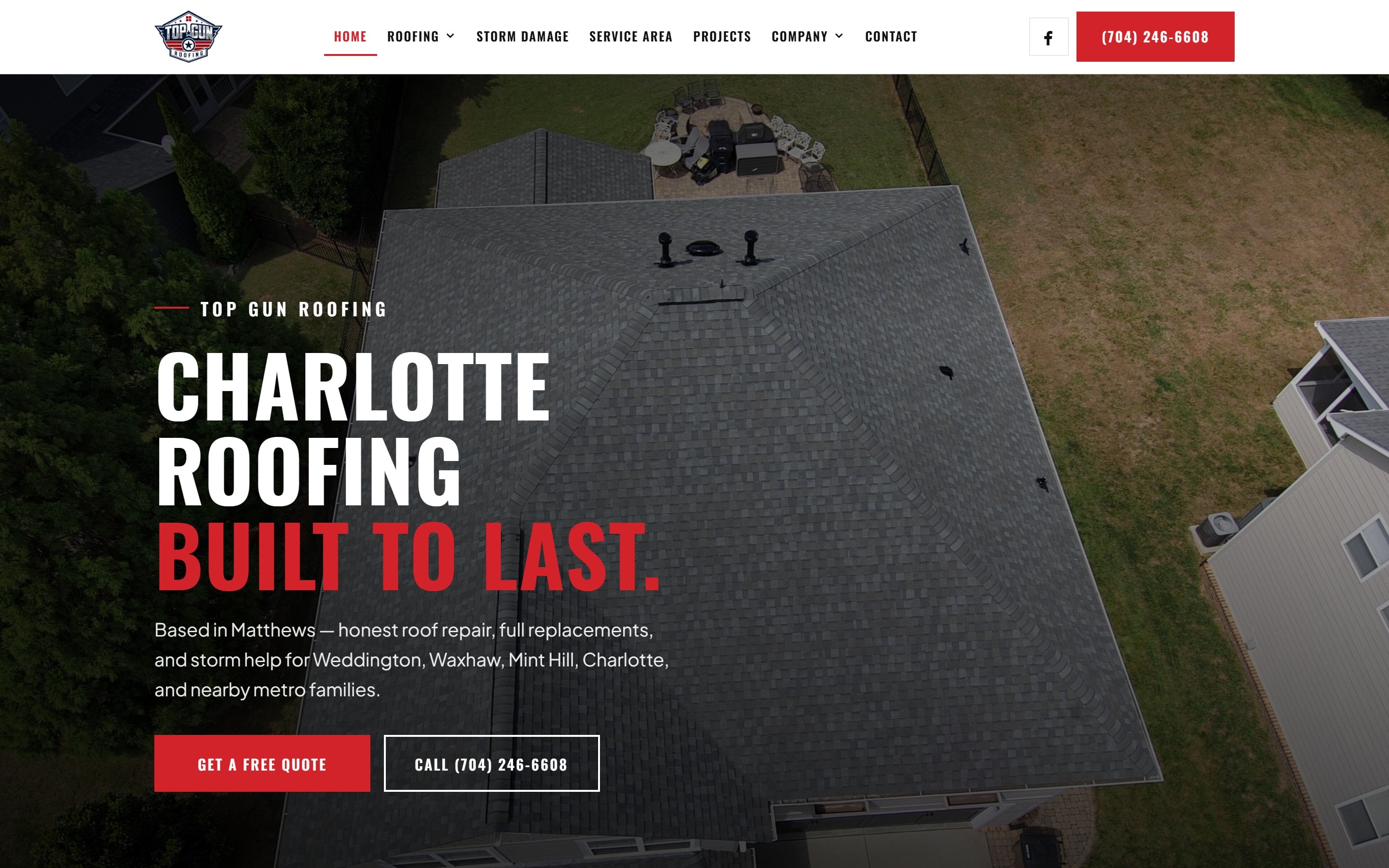
Top Gun Roofing is a Matthews-based residential crew serving Charlotte metro homeowners—but homeowners shopping for roof repair, replacement, and storm help start online. Without a site built around local search, clear services, and frictionless quote requests, too many high-intent calls were going to whichever competitor showed up first.
This is the reality many businesses face: strong service, loyal customers, but a digital presence that fails to reflect either. The gap between how good a business is and how well it presents online is where revenue is lost every day.
How We Navigated It
We designed and launched a website built around how Charlotte homeowners shop for a roofer: dedicated pages for repair, replacement, storm damage, insurance claims, and emergency leaks; pages for Matthews, Weddington, Waxhaw, Mint Hill, and nearby towns; real reviews and project photos; and a free-inspection request plus one-tap calling so homeowners can reach the crew right away.
The work wasn’t just aesthetic—it was strategic architecture. Every element was designed to serve a specific role in the conversion funnel, from the first thing visitors see through to the contact form and automatic follow-up.
Discovery & Strategy
Market research, competitive analysis, and goal-setting.
Brand & Design
Brand refinement and design that turns visitors into customers.
Build & Integrate
Building the site, easy self-editing, and time-saving automations.
Launch & Optimize
Getting found on Google, testing, and speed tuning.
What We Achieved Together
Service and town pages that help local homeowners find the crew on Google
Quote and call buttons on every key page, always within reach on phones
Real Google reviews, project photos, and clear storm and insurance help that build trust
Ready to write your own story?
Results like these start with a conversation. Let's talk about what's possible for your business.
DuckPass
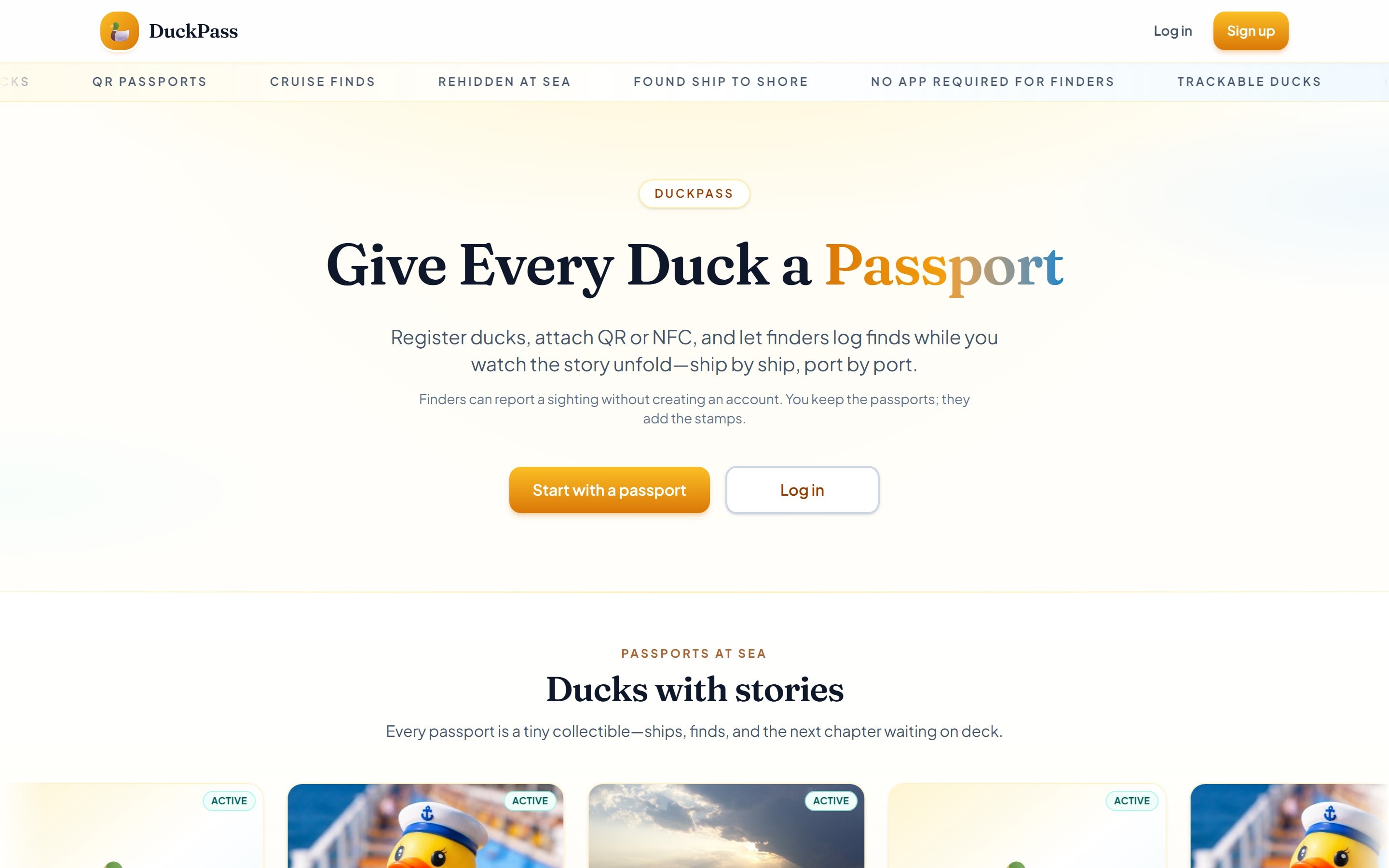
Duck hiding is one of the fastest-growing community traditions aboard cruise ships — passengers hide rubber ducks for other cruisers to find, re-hide, and track across voyages. But the tracking lived in Facebook groups, spreadsheets, and paper notes. There was no dedicated platform: no way to issue a persistent identity to a duck, log finds across multiple ships, or give finders a frictionless experience without requiring an account.