
Where We Started
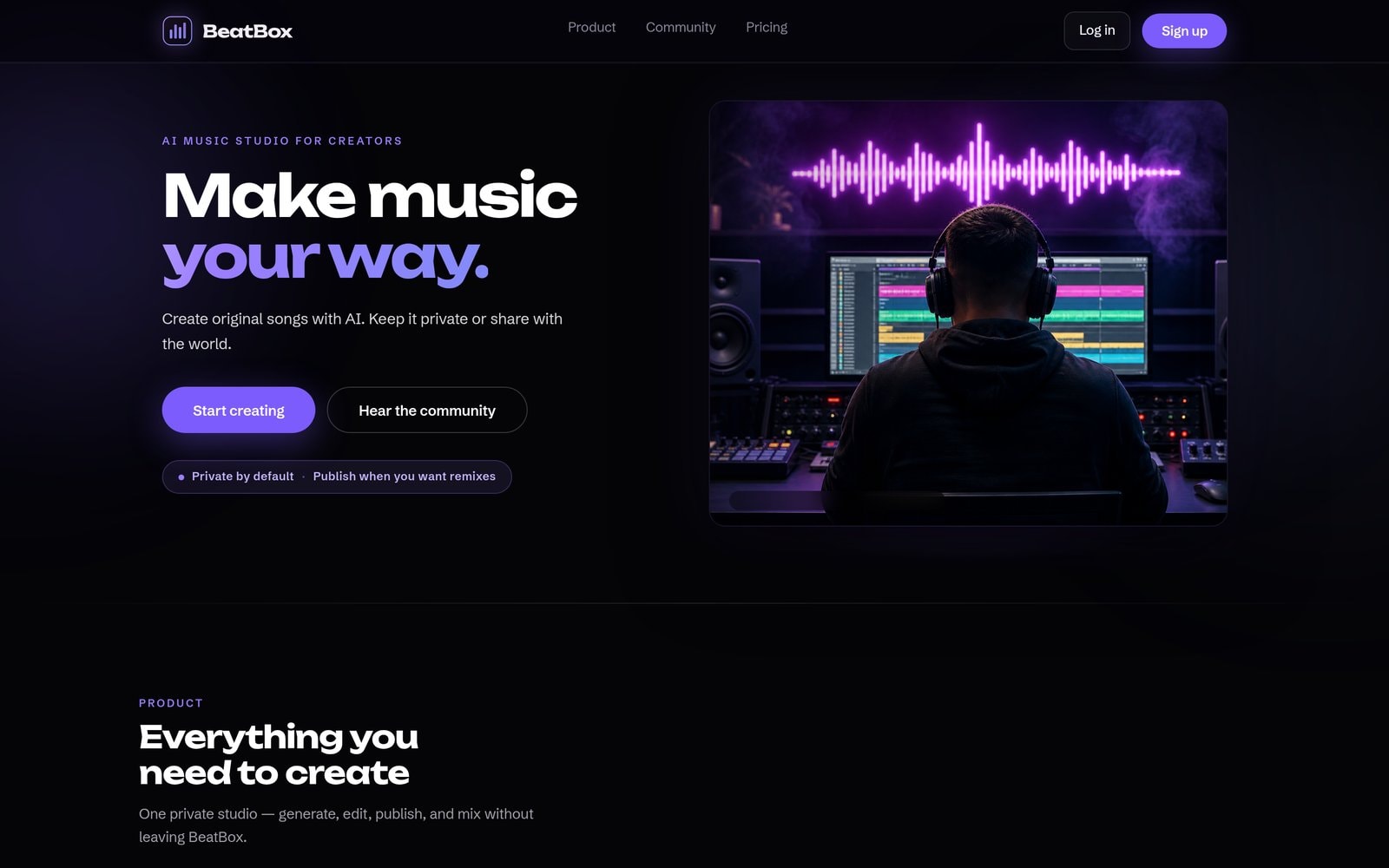
Beat Box set out to give creators one place to make original music with AI. Generating a song is only the start: creators also need to refine it, organize their work, perform it, and decide when and where to share it. Most tools cover one of those steps and leave the rest to a patchwork of other apps.
Creators also want control. Their tracks should stay private until they choose to publish, and the product had to make powerful AI music creation feel simple.
How We Navigated It
We designed and built Beat Box as a full product at thebeatbox.app. The app is organized around Create, Library, Studio, and DJ. Creators generate singles or full albums with AI, organize tracks in their library, fine-tune them in Studio with arrangement and layer tools, and build and play DJ sets. Tracks stay private by default, and creators can publish to a community feed for remixes or release through their own artist shop.
Behind the scenes, creator accounts, dedicated music-generation computers, and secure cloud storage keep every creator's library available whenever they need it. A public homepage, pricing plans, share links, and an owner dashboard round out the platform.
Discovery & Strategy
Market research, competitive analysis, and goal-setting.
Brand & Design
Brand refinement and design that turns visitors into customers.
Build & Integrate
Building the site, easy self-editing, and time-saving automations.
Launch & Optimize
Getting found on Google, testing, and speed tuning.
What We Achieved Together
Full AI music studio live at thebeatbox.app: Create, Library, Studio, and DJ in one product
Private by default, with one-step publishing to a community feed and an artist shop
Dedicated music-generation setup that creates singles and full albums
Ready to write your own story?
Results like these start with a conversation. Let's talk about what's possible for your business.
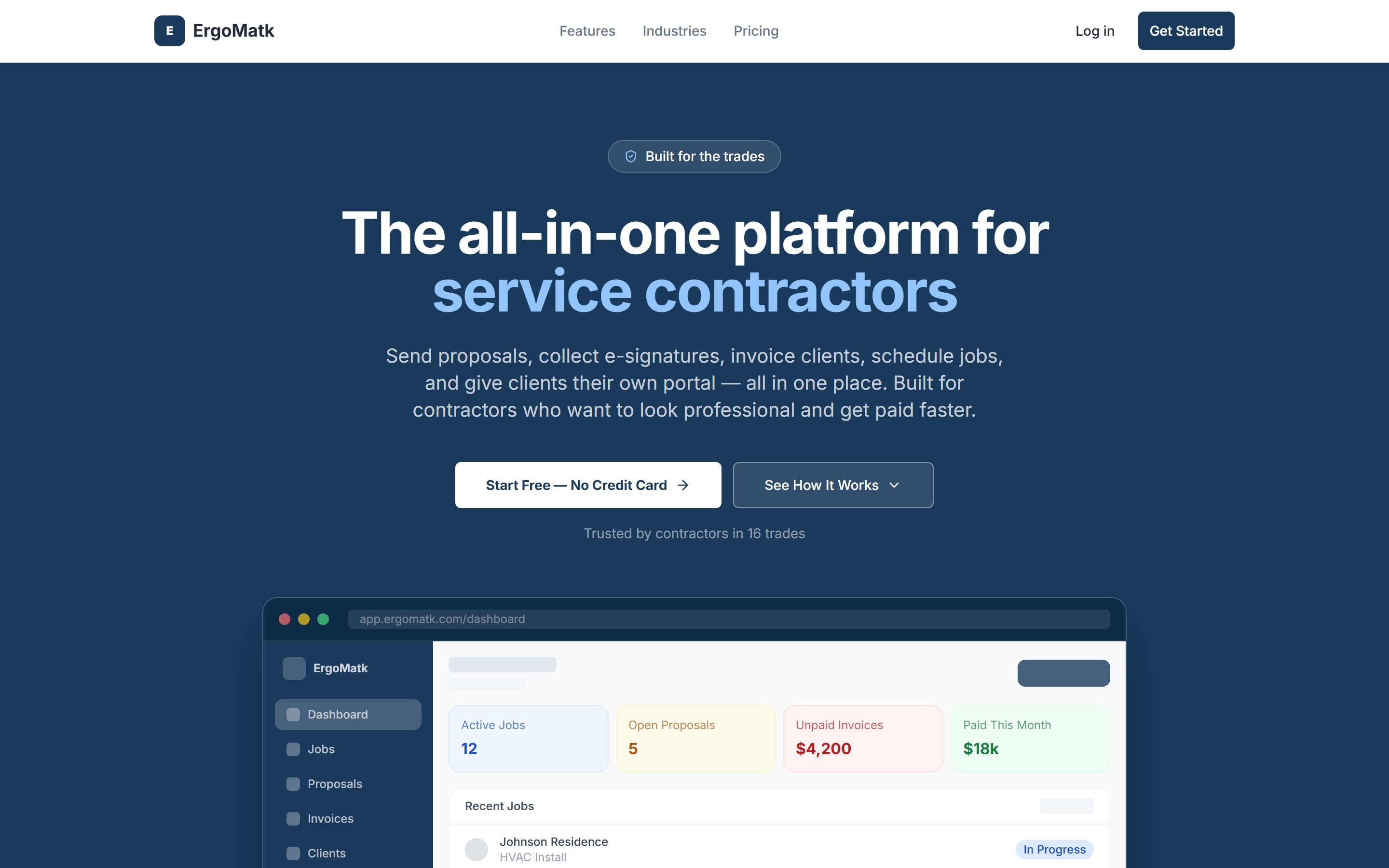
ErgoMatk
Service contractors across roofing, HVAC, electrical, and 13 other trades were losing bids, chasing late payments, and fielding endless 'project status' calls — all because their operations ran on Word docs, text messages, and spreadsheets. The opportunity was clear: build software that makes every contractor look as professional as the work they deliver.